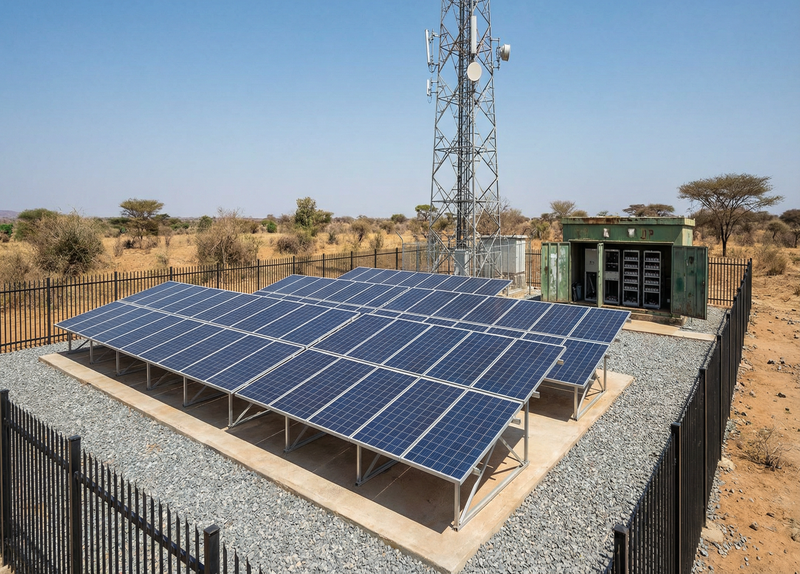
The telecommunications industry in Nigeria is undergoing a massive transformation. To combat the crippling costs of diesel and the unreliability of the national power grid, operators are aggressively deploying solar photovoltaic (PV) arrays and advanced Lithium-ion battery storage at their base transceiver stations (BTS). This shift towards renewable energy is a critical economic and operational imperative.
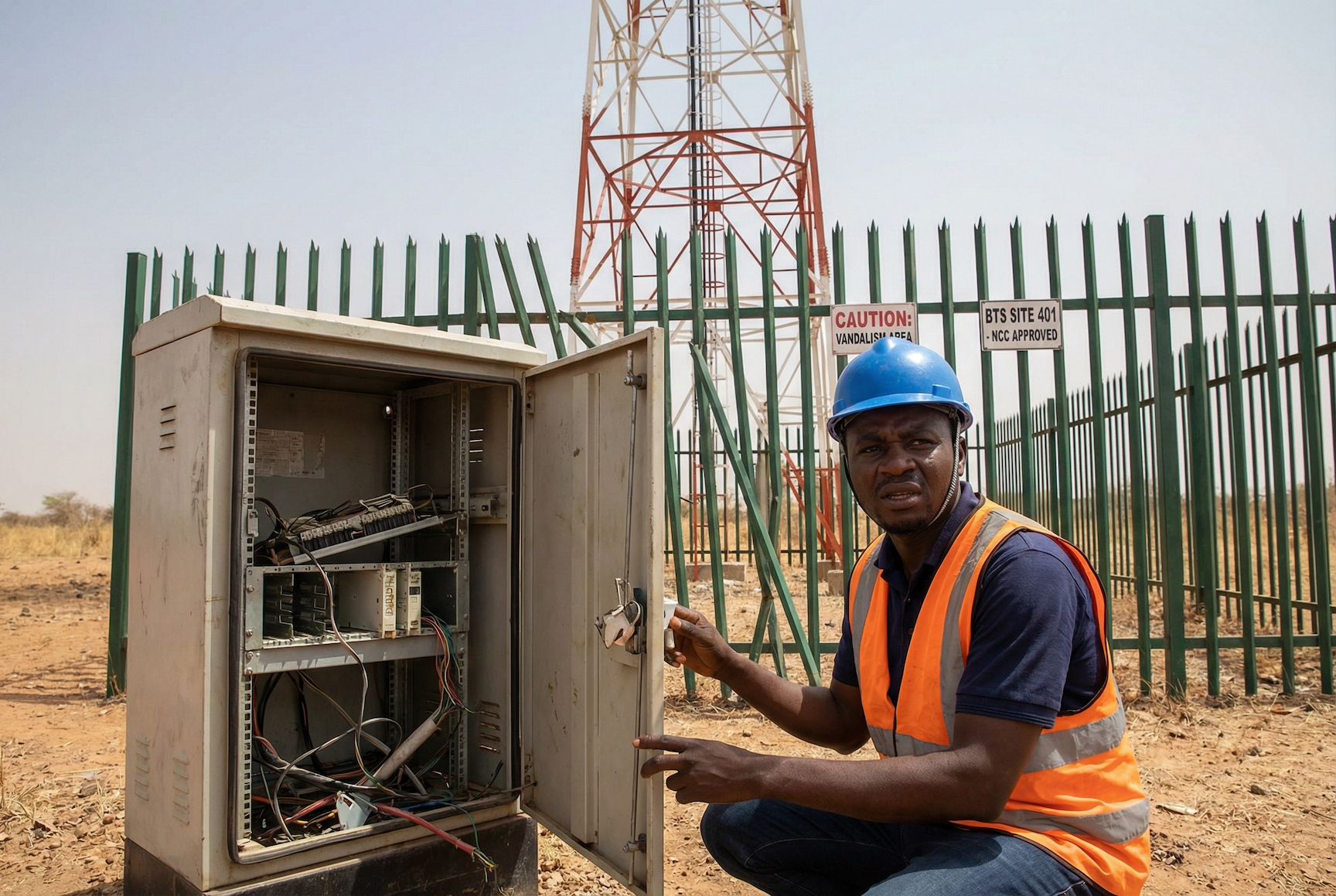
However, this transition introduces a new and severe challenge: securing these high-value assets at remote, often unmanned sites.
Renewable energy equipment specifically solar panels and deep-cycle batteries—are incredibly valuable on the black market. As the demand for off-grid power solutions grows among Nigerian households and small businesses, stolen telecom batteries and panels find a ready and lucrative secondary market.
For a telecom operator, the theft of a battery bank is devastating. It is not just the capital expenditure (CAPEX) lost in replacing the stolen equipment. The immediate consequence is a complete site outage once the sun goes down or the backup generator fails. This leads to dropped calls, frustrated subscribers, and significant revenue loss.
In recent years, the industry has reported an alarming number of vandalism incidents, with remote sites being particularly vulnerable. Traditional security measures, such as chain-link fences and mechanical padlocks, have proven entirely inadequate against determined vandals equipped with bolt cutters and angle grinders.
Protecting green infrastructure requires a robust, multi-layered approach that combines physical fortification with intelligent, digital access control. Investing millions in solar hybrid systems is futile if those systems are stolen weeks after deployment.
1. Industrial-Grade Physical ProtectionThe first line of defense is physical. Traditional, flimsy equipment cabinets are easily breached. Operators must deploy rugged, custom-manufactured outdoor transmission cabinets engineered from heavy-gauge steel. These enclosures must be designed to withstand severe physical tampering, extreme weather conditions, and corrosive environments. Features such as concealed hinges, reinforced doors, and anti-pry lips are essential to deter forced entry.
2. Intelligent Access ManagementPhysical strength must be paired with digital intelligence. The era of the mechanical padlock is over. Managing thousands of physical keys across a dispersed network is a logistical nightmare and a massive security vulnerability. Keys are easily lost, copied, or handed over to unauthorized individuals.
The solution lies in smart, keyless electronic locking systems. These platforms replace padlocks with heavy-duty electromechanical locks controlled via a centralized management dashboard.
•Real-Time Control: Network Operation Centers (NOC) can grant or revoke access to specific sites in real time, directly to an engineer's smartphone.
•Audit Trails: Every access event is logged, creating a complete audit trail of who accessed which cabinet and when.
•Alerts and Alarms: If a cabinet is forced open or left ajar, the system immediately triggers an alarm at the NOC, allowing for a rapid security response.
At Vesselnet, we understand that security is not an afterthought; it is a foundational pillar of sustainable telecom infrastructure. Through our PROTECT and SECURE pillars, we provide the integrated solutions necessary to safeguard operators' investments in renewable energy.
We manufacture and deploy industrial-grade outdoor enclosures that provide unparalleled physical protection for sensitive equipment and high-value batteries. We then integrate these cabinets with our state-of-the-art intelligent access management systems, ensuring that operators have complete, real-time control over their remote sites.
By combining robust physical enclosures with smart, keyless security, Vesselnet ensures that the transition to green energy is not just sustainable and cost-effective, but secure against the persistent threat of vandalism.
Vesselnet delivers integrated solutions that power network connectivity, from rapid network deployment to sustainable energy and intelligent access site control solutions.

Your Reliable Partner
Delivering reliable telecom infrastructure, sustainable energy, and network solutions across Nigeria and Africa.


.png)
.png)
.png)
.png)
.png)
