.png)
Building Resilience: Navigating the Future of Telecom Infrastructure in West Africa
The telecommunications landscape in West Africais evolving at an unprecedented pace. Driven by rising data consumption,expanding digital services, and a growing dependence on mobile connectivity,the region's digital economy is booming. However, as operators push to expandcoverage and introduce next-generation technologies like 5G, they facesignificant infrastructural and operational hurdles. Building a robust,future-proof network requires more than just laying fibre it demands astrategic approach to power, security, and deployment
The Push for Network Redundancy
In early 2024, West Africa experienced a wake-up call whenmultiple subsea cables including WACS, MainOne, SAT3, and ACE sufferedsimultaneous failures [1]. This disruption highlighted the criticalvulnerability of relying on single points of failure for regional connectivity.The industry's response has been swift, focusing on network resilience andredundancy.
Operators are now diversifying their connectivitybackbones. We are seeing increased investments in satellite backhaul servicesto complement terrestrial networks, alongside massive fibre buildout projects.For instance, Nigeria is accelerating its digital transformation with plans toadd 90,000 kilometres of fibre-optic network to its national grid [2]. As datacentre construction accelerates across the region, the need for rapid,resilient network deployment (from civil works to precision RF planning) hasnever been more urgent.
Overcoming the Power Deficit
Perhaps the most persistent challenge facing telecomoperators in West Africa, particularly in Nigeria, is power instability. Thenational power grid remains prone to frequent collapses, forcing telecomcompanies to rely heavily on diesel generators to keep their base transceiverstations (BTS) operational [3]. With over 30,000 base stations nationwide, therising cost of diesel and the logistical nightmare of fueling remote sitesplace an immense financial strain on operators.
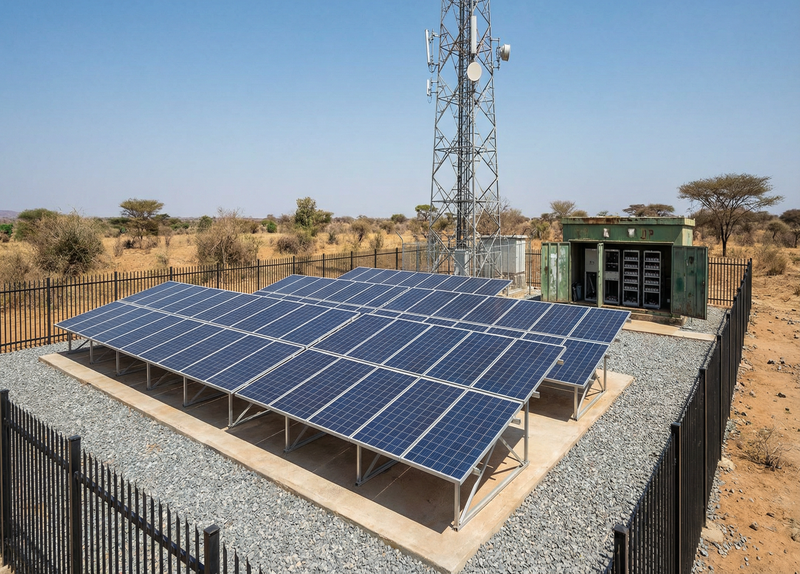
This power deficit is driving a massive shift towardssustainable energy infrastructure. Operators are increasingly exploring hybridmini-grids and off-grid solar PV systems paired with advanced battery storage.Transitioning to solar-powered base stations not only reduces operationalexpenditure and diesel dependency but also ensures the 24/7 uptime required forcritical communication networks.
Securing Critical Infrastructure
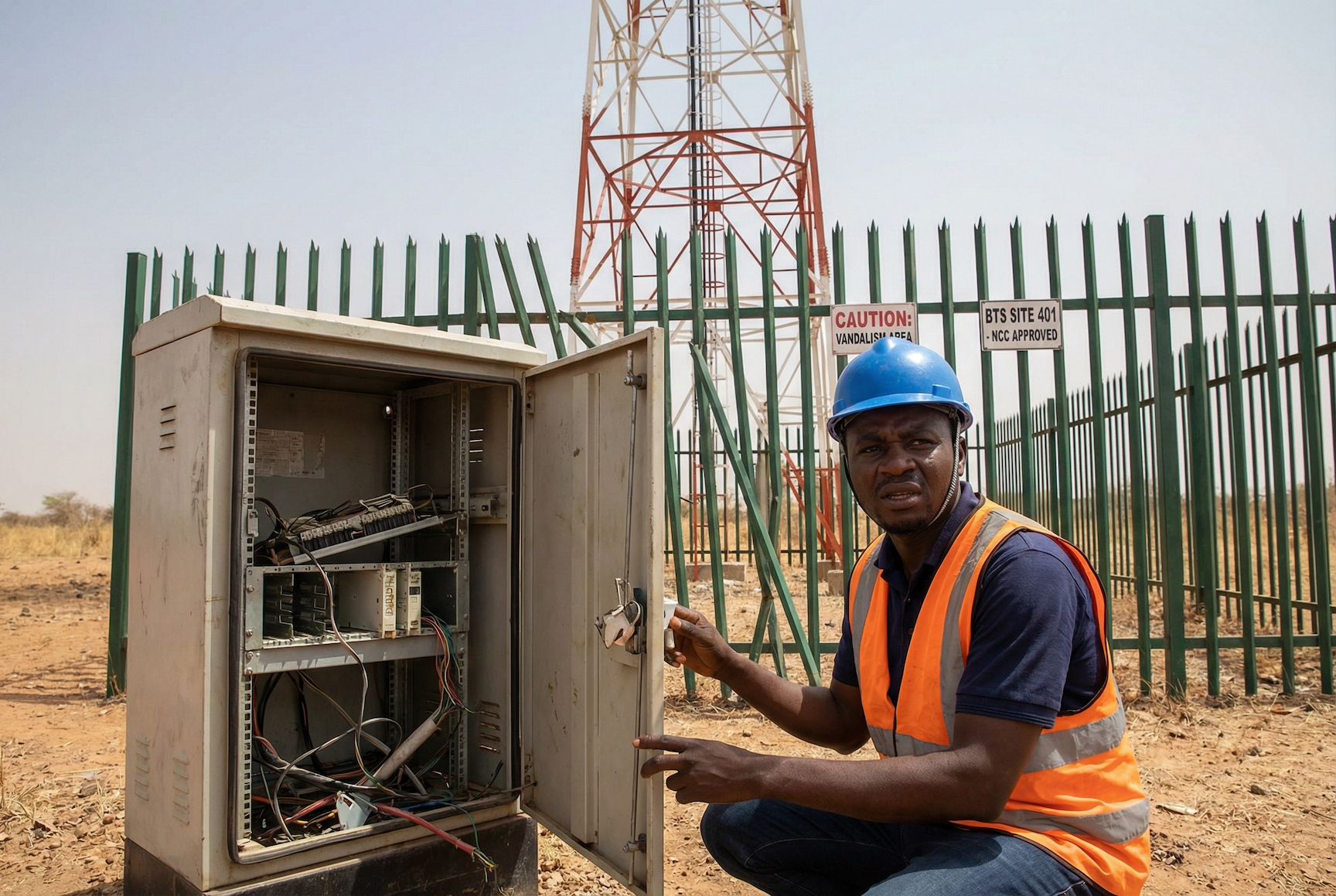
Beyond power, physical infrastructure remains underconstant threat. Telecom assets are frequently targeted by vandals and thieves,with reports indicating an alarming average of 1,700 incidents of vandalism andfibre cuts each week in Nigeria alone [4]. These activities disrupt services,slow down financial transactions, and cost businesses millions.
Protecting these vital assets requires a dual approach:
1 Industrial-Grade Enclosures:Deploying rugged, weatherproof outdoor transmission cabinets engineered towithstand both harsh environmental conditions and physical tampering.
2 Intelligent Access Management:Implementing smart, keyless electronic locks and centralized managementplatforms. These systems allow operators to monitor, manage, and audit siteentry in real time, ensuring that only authorized personnel can access remotetelecom sites.
The Road Ahead
The future of telecom infrastructure in West Africadepends on integrated solutions that address deployment, power, protection, andsecurity simultaneously. As the region builds the digital foundation for thenext decade of economic growth, the focus must shift from merely expandingnetworks to ensuring they are sustainable, secure, and resilient.
At Vesselnet, we understand these complex challenges. Bydelivering end-to-end infrastructure solutions from rapid network deploymentand solar energy systems to industrial-grade outdoor equipment and intelligentaccess control—we are proud to build and support the connectivity backbone thatpowers communities and enterprises across West Africa.
References
[1] ITW Africa. "What did 2024 bring for West Africanconnectivity?" https://www.internationaltelecomsweekafrica.com/africa-connectivity-insights/2024-bring-west-african-connectivity[2] Telecom Review Africa. "Nigeria Accelerates Digital Infrastructurewith New Satellites and Fiber Expansion." https://www.telecomreviewafrica.com/articles/general-news/28211-nigeria-accelerates-digital-infrastructure-with-new-satellites-and-fiber-expansion/[3] Reuters. "Explainer: Why Nigeria's power grid is failing." https://www.reuters.com/world/africa/why-nigerias-power-grid-is-failing-2024-12-11/[4] Inlomax. "Nigeria’s Telecom Sector Battles Power and InfrastructureChallenges." https://inlomax.com/blog/nigerias-telecom-sector-battles-power-and-infrastructure-challenges/
Vesselnet delivers integrated solutions that power network connectivity, from rapid network deployment to sustainable energy and intelligent access site control solutions.

Your Reliable Partner
Delivering reliable telecom infrastructure, sustainable energy, and network solutions across Nigeria and Africa.


.png)
.png)
.png)
.png)